Aurobindo Pharma Buyback 2026: What It Really Means for You as an Investor
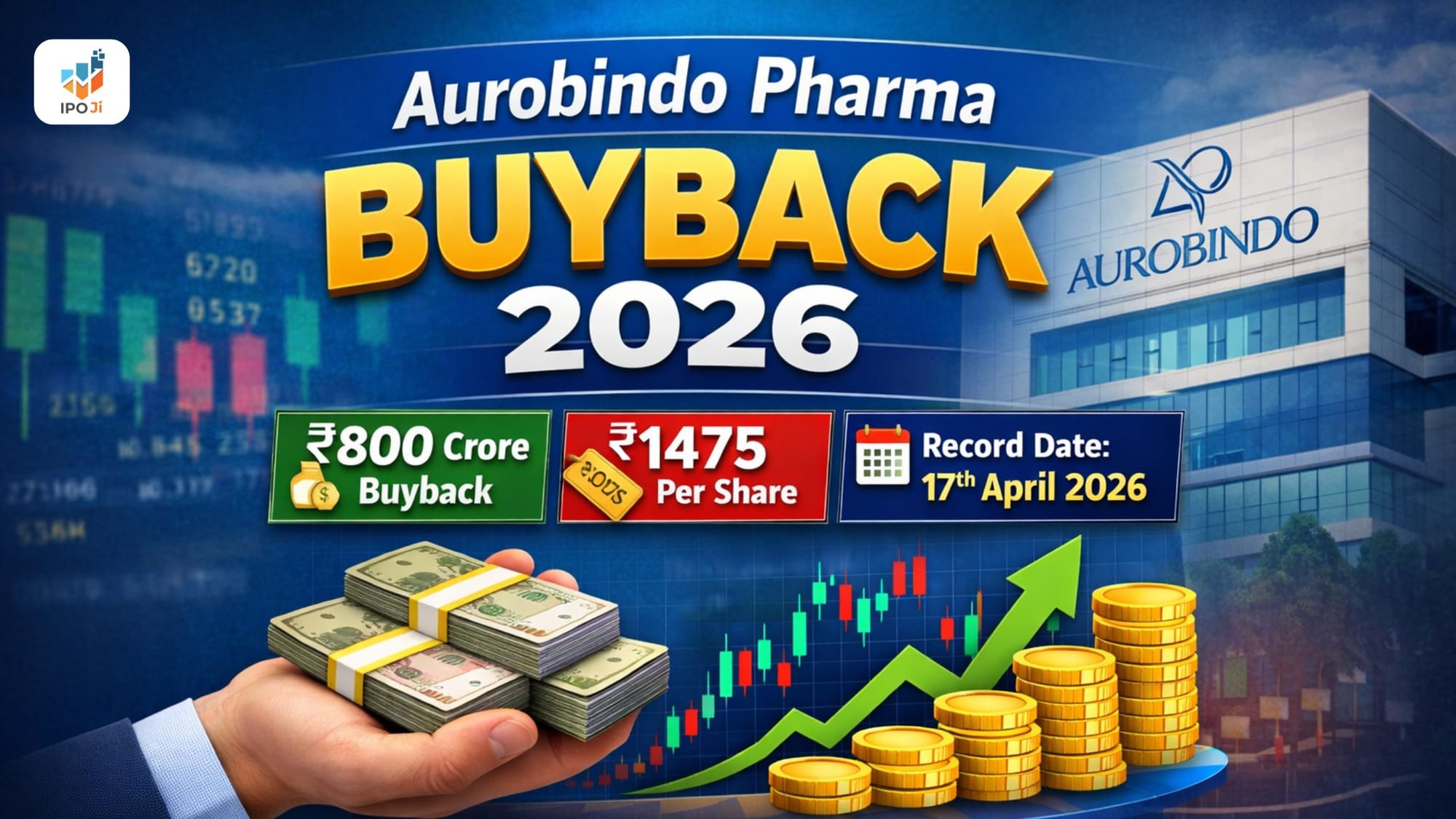
When a company like Aurobindo Pharma Limited announces a buyback, it immediately creates a buzz. A ₹800 crore buyback at ₹1,475 per share, when the stock is trading around ₹1,340–₹1,350, sounds like a straightforward opportunity. On paper, it feels like a clean 10% upside sitting right in front of you.
But if markets were that easy, everyone would be making money all the time.
The reality of buybacks is more layered. And if you’re approaching this with the mindset of “buy now, sell at ₹1,475, book profit,” you’re only seeing half the picture.
The detailed timeline for the tendering process will be announced by the company after the record date.
Let’s slow this down and understand it the way a serious investor would.
The company’s board approved this buyback on April 6, 2026, and the announcement has been officially filed with exchanges like the NSE and BSE. The structure is a tender offer, which means the company is inviting shareholders to sell their shares back at a fixed price. The record date is April 17, 2026, and only those who hold shares on that date will be eligible to participate.
So far, everything sounds simple.
You buy before the record date, hold the shares, and then tender them in the buyback. The company buys them at ₹1,475. Profit booked.
Except that’s not how it actually plays out.
The first thing you need to understand—and this is where most people make mistakes—is that the company will not buy all your shares. It will only buy a portion of them. This portion is determined by something called the acceptance ratio, which depends on how many total shares are tendered by all investors.
In this case, the company is buying back only about 0.93% of its total equity. That’s a relatively small percentage. Which means a large number of shareholders will be competing for a limited buyback pool. Naturally, not everyone’s shares can be accepted in full.
So if you buy, say, 100 shares, it’s very unlikely that all 100 will be accepted. Maybe 30 get accepted, maybe 50, maybe even less depending on participation levels. The rest of the shares stay in your Demat account.
And that changes everything.
Because now your return is not based on 100 shares being sold at ₹1,475. It is based only on the shares that actually get accepted. The remaining shares are exposed to the market, just like any normal stock holding.
This is where the second layer of complexity comes in.
What happens to the stock price after the record date?
If you look at past buybacks, there is often a pattern. Before the record date, the stock tends to move up as investors accumulate shares to become eligible. After the record date, once eligibility is locked in, short-term participants start exiting. This can lead to a price correction.
It doesn’t happen every time, but it is often observed.
So now imagine this situation. You bought the stock at ₹1,344. Only a portion of your shares gets accepted at ₹1,475. Meanwhile, the remaining shares are now trading lower in the market. Your final profit is not just about the premium—you also have to account for what happens to the leftover shares.
This is why buybacks are not “guaranteed return” opportunities. They are structured trades where outcome depends on multiple moving parts.
That said, there is a reason why retail investors still participate actively in buybacks.
The key lies in categorization.
If your investment is within ₹2 lakh, you fall under the retail category. In most buybacks, a portion of shares is reserved specifically for retail investors, and historically, the acceptance ratio in this category tends to be better than in the general category.
It’s not a guarantee, but it improves your odds.
This is why experienced investors rarely go all-in with large capital. Instead, they structure their participation to stay within the retail limit, optimizing their chances of higher acceptance.
From the company’s perspective, this buyback sends a positive signal. Companies typically opt for buybacks when they have surplus cash and limited immediate need for reinvestment. It reflects confidence in their financial position and a willingness to return capital to shareholders.
In the case of Aurobindo Pharma, it indicates strong cash flows and disciplined capital allocation. The company is not just sitting on cash; it is actively choosing to deploy it in a way that benefits shareholders.
That’s fundamentally a healthy sign.
But as an investor, your focus should remain on execution rather than intention.
The opportunity here is real, but it is conditional. It depends on how you enter, how many shares get accepted, and how you handle the remaining position.
If you enter at inflated prices just before the record date, your margin of safety reduces. If you panic after the record date due to price movements, you may exit at the wrong time. And if you assume full acceptance, your expectations may not match reality.
On the other hand, if you approach this with a clear understanding—that only partial shares will be accepted, that the stock may move unpredictably, and that returns are probabilistic—you are far more likely to navigate this successfully.
There’s also a psychological aspect to buybacks that often gets overlooked.
Because the buyback price is fixed and higher than the current market price, it creates a sense of certainty. It feels like the outcome is already defined. But in reality, the uncertainty has just shifted—from price risk to allocation risk.
And unless you account for that shift, your decision-making can become biased.
So, should you participate?
The honest answer is that this is not a yes-or-no situation. It depends on how you think about risk and how actively you manage your investments.
If you are comfortable with short-term trades, understand the mechanics of acceptance ratios, and are willing to monitor the position through the buyback cycle, this can be a meaningful opportunity. Not extraordinary, but reasonable.
If you are looking for a straightforward, predictable return without much involvement, this may not fit your style.
In the end, the Aurobindo Pharma buyback is a good example of how markets reward clarity over excitement.
The ₹1,475 price is attractive, but it is not the full story. What matters more is how much of your investment actually benefits from that price, and what happens to the rest.
Once you start thinking in those terms, you stop treating buybacks as easy trades and start treating them as calculated decisions.
And that shift is what separates casual participation from informed investing.