SEBI Extends IPO Clearance Deadline Amid War-Driven Market Volatility: A Strategic Relief for India’s IPO Market
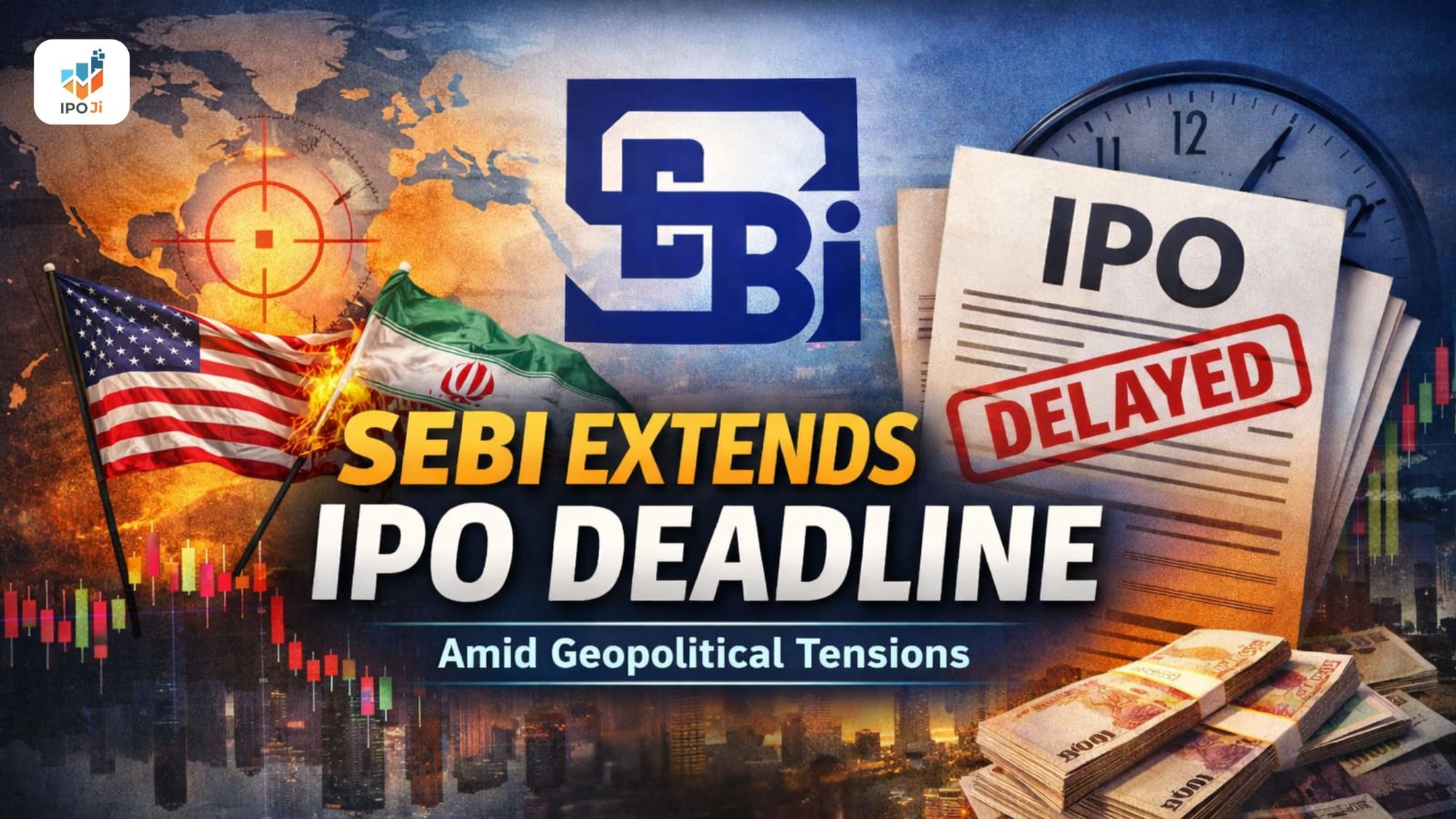
India’s primary market is entering a phase of cautious recalibration as the Securities and Exchange Board of India (SEBI) steps in with a timely and strategic intervention. In a recent circular issued on April 7, 2026, SEBI extended the validity of IPO observation letters, offering much-needed flexibility to companies planning to go public. This move comes against the backdrop of rising geopolitical tensions, particularly the ongoing West Asia conflict and the US-Iran war, which have significantly impacted investor sentiment, capital flows, and overall market stability. For a market that thrives on timing, confidence, and liquidity, this decision marks an important shift toward adaptive regulation.
The extension applies to observation letters expiring between April 1, 2026 and September 30, 2026, which will now remain valid until September 30, 2026. An observation letter is a crucial regulatory milestone in the IPO process, indicating that SEBI has reviewed the Draft Red Herring Prospectus (DRHP), suggested necessary compliance changes, and cleared the company to launch its public issue. Under the normal route observation letter is valid for 12 months and, if filed through confidential route validity is upto 18 months. However, given the current volatile market conditions, subdued investor participation, and challenges in mobilizing resources, SEBI has provided a one-time relaxation, subject to an undertaking from the lead manager confirming compliance with updated regulatory requirements at the time of filing revised offer documents.
This development is deeply rooted in the broader macroeconomic and geopolitical environment. The ongoing conflict in West Asia, coupled with global uncertainty triggered by the US-Iran war, has led to increased volatility in equity markets and a slowdown in capital inflows. As a result, several companies have either deferred or recalibrated their IPO plans to avoid unfavorable valuations and weak listing performance. Reports suggest that nearly ₹18,000 crore worth of planned IPO fundraising has been impacted by these disruptions, highlighting the scale of uncertainty in the primary market. In such a scenario, forcing companies to adhere to rigid deadlines could have led to value erosion for both issuers and investors, making SEBI’s intervention both timely and necessary.
The extension provides significant relief to around 13 mainboard IPO candidates that were nearing their deadline to launch public issues. Notable among them are Hero Fincorp Ltd, Continuum Green Energy Ltd, and Veritas Finance Ltd, all of which are planning large-scale IPOs backed by prominent investors. With additional time at their disposal, these companies can now reassess market conditions, optimize their valuation strategies, and choose a more favorable window for listing. This not only enhances their chances of a successful IPO but also protects investor interest by reducing the risk of underperformance post-listing.
Beyond IPO-bound companies, SEBI has also addressed challenges faced by already listed firms by granting a one-time relaxation from penalties related to Minimum Public Shareholding (MPS) norms. Companies whose compliance deadlines fall within the same April to September 2026 window will not face penalties, allowing them to avoid forced equity dilution during a period of market instability. This dual relief—targeting both upcoming IPOs and listed companies—demonstrates SEBI’s broader intent to maintain equilibrium in the capital markets while acknowledging external economic pressures.
From an investor’s perspective, this move signals a more stable and thoughtful IPO ecosystem. While some IPO launches may be delayed in the short term, the quality of listings is expected to improve as companies gain time to strengthen their financial positioning and align their pricing with realistic market expectations. Instead of rushed public issues driven by regulatory deadlines, the market is likely to witness more strategically timed IPOs with better fundamentals and stronger investor participation. This shift can ultimately enhance long-term wealth creation and reduce the risks associated with volatile market entries.
For those actively tracking the IPO market, this is also an opportunity to adopt a more research-driven approach. With companies taking additional time before launching their issues, investors can analyze business models, financial performance, sector trends, and valuation benchmarks more thoroughly. The focus shifts from short-term listing gains to long-term investment potential, aligning with a more mature and disciplined investment strategy.
SEBI’s decision reflects a proactive regulatory philosophy that prioritizes market stability over procedural rigidity. By recognizing the impact of geopolitical tensions and global financial disruptions, the regulator has reinforced its commitment to protecting both issuers and investors. In doing so, it has ensured that India’s IPO market remains resilient, credible, and aligned with global best practices even in times of uncertainty.
As the situation evolves, the extended timeline is expected to play a crucial role in shaping the next phase of India’s IPO landscape. Once market conditions stabilize and investor confidence returns, a stronger pipeline of IPOs is likely to emerge, backed by better pricing strategies and improved participation. For now, this move stands as a reminder that in capital markets, timing is not just important—it is everything.
Stay updated with IPO Ji for in-depth IPO analysis, upcoming IPO tracking, and expert insights.