
NSE Files DRHP with SEBI for IPO: Issue Size, OFS and Key Details
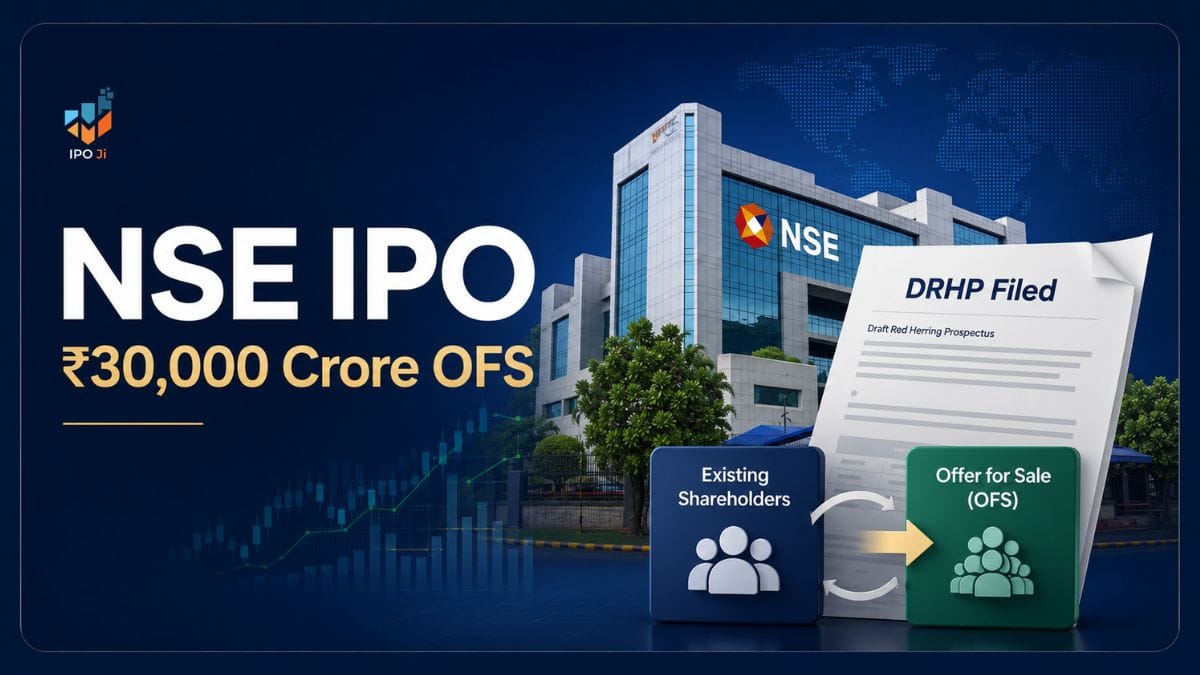
NSE filed its Draft Red Herring Prospectus (DRHP) with SEBI on June 17, 2026, kicking off the NSE IPO process. The issue is structured entirely as an Offer for Sale (OFS) — existing shareholders are selling shares, and NSE itself isn't issuing fresh equity or receiving any new capital. Early estimates put the NSE IPO size at close to ₹30,000 crore, based on the exchange's unlisted valuation of nearly ₹5 lakh crore, which could make it the largest IPO in India, ahead of the Hyundai Motor India IPO's ₹27,859 crore issue in 2024. In short, this is a shareholder exit and ownership-change event, not a fund-raising exercise for NSE.
The IPO is being managed by a syndicate of 20 Book Running Lead Managers — including Kotak Mahindra Capital, JM Financial, Morgan Stanley, JP Morgan, HSBC, Citi, SBI Capital Markets, Axis Capital, and ICICI Securities — the largest banker consortium ever assembled for an Indian IPO.
What's Actually Being Sold in the NSE IPO
This NSE offer for sale covers up to 148,905,525 equity shares — all currently held by existing shareholders, not new shares created by NSE.
SBI is the largest seller, offering 24.75 million shares. Bank of Baroda and Stock Holding Corporation of India are each offering close to 11 million shares. Among insurers, GIC is offering about 10.65 million shares, New India Assurance about 10.5 million shares, and National Insurance and United India Insurance about 6 million shares each.
LIC holds a stake in NSE but is not selling in this round.
It's worth being clear about where the money goes: every rupee raised in this OFS goes to the selling shareholders, not to NSE. The exchange is not issuing fresh equity, so this listing changes who owns NSE's shares — it doesn't put new capital on NSE's books. Price band, lot size, opening date, and listing date are not yet disclosed.
The Numbers Behind the Listing
The NSE DRHP also lays out three years of financials. Total income rose from ₹16,352.06 crore in FY24 to ₹19,176.83 crore in FY25, then eased to ₹18,713.37 crore in FY26.
Revenue from operations followed the same pattern — up to ₹17,140.68 crore in FY25, then down to ₹16,601.31 crore in FY26. Total expenses, excluding the Core Settlement Guarantee Fund contribution, moved the other way, climbing from ₹4,806.29 crore to ₹5,999.90 crore over the same period.
Net profit for FY26 came in at ₹10,302.06 crore, lower than the year before. FY26 operating revenue declined while expenses increased. These are the key trends readers can track in later issue documents.
NSE IPO FAQs
Is the NSE IPO bringing new money into the exchange?
No. The entire issue is an Offer for Sale, so existing shareholders are selling shares. NSE will not receive fresh capital, and no new equity shares are being issued.
Who is selling shares in the NSE IPO?
State Bank of India is the largest seller. Other selling shareholders include Bank of Baroda, Stock Holding Corporation of India, GIC, New India Assurance, National Insurance and United India Insurance. LIC holds a stake but is not selling in this round.
Will the NSE IPO be India’s largest?
The final issue size has not yet been disclosed. At the estimated ₹30,000 crore size, it could surpass Hyundai Motor India’s ₹27,859 crore IPO to become India’s largest.
When will the NSE IPO open?
The opening date has not yet been announced. The price band, lot size and listing date are also pending disclosure in later issue filings.
This article is for informational purposes only and does not constitute investment advice.
Related reading: